
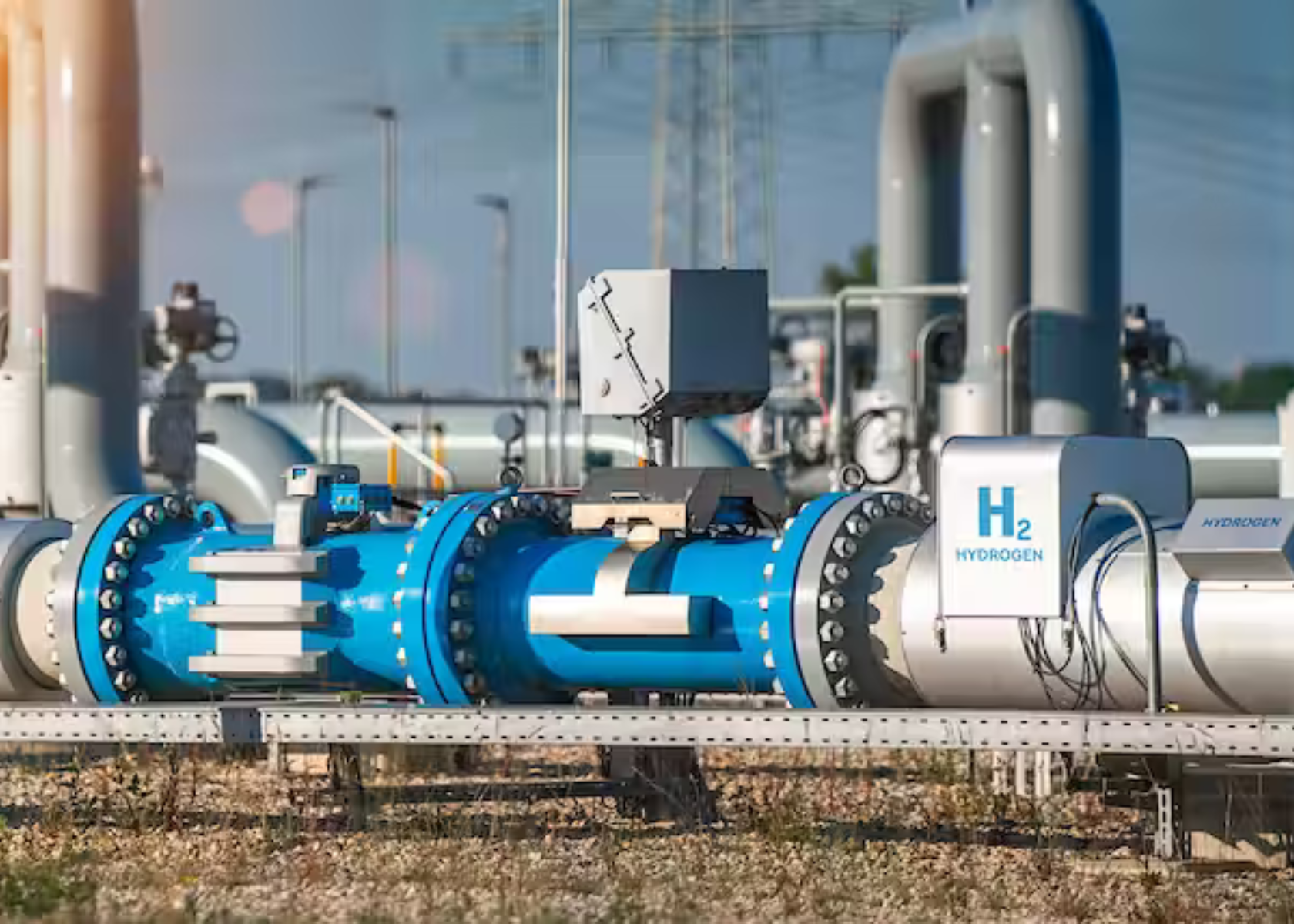
As the world grapples with the urgent need to transition towards more sustainable and eco-friendly energy sources, hydrogen has emerged as a frontrunner in the race for clean energy solutions. However, a key challenge remains: how to transport large volumes of hydrogen from production sites to end-use locations reliably and economically. Pipelines have emerged as a leading candidate for reliable and economical large-scale distribution of hydrogen. In this blog, we delve deeper into the promise and challenges associated with scaling up hydrogen transportation globally through an expanded ecosystem of pipelines.
A Global Progress Report
In developed nations, hydrogen pipeline transportation has a rich history, exemplified by the operational success of the 208 km hydrogen pipeline at the Hull Chemical Plant in Germany since its construction in 1939.
According to the 2019 “White Paper on China’s Hydrogen Energy and Fuel Cell Industry,” the United States currently boasts an extensive network of 2500 km of hydrogen pipelines, with Europe closely following at 1598 km. In contrast, China’s hydrogen pipelines are in their early stages, with ambitious plans to construct over 3000 km by 2030.
Hydrogen Integration in Natural Gas Pipelines
The global natural gas sector is witnessing substantial growth, marked by the construction or planning of numerous pipelines worldwide. However, the cost of building hydrogen transmission pipelines exceeds that of natural gas pipelines by more than 10%.
In recent years, scholars worldwide have turned their attention to integrating hydrogen into natural gas pipelines for transportation, making it a key area of research. This approach, recognized as Hydrogen Compressed Natural Gas (HCNG) or Hythan (hydrogen–methane mixture), is gaining traction as an innovative solution. The ensuing discussion explores the global research landscape, showcasing project cases and outlining both the challenges and advantages associated with blending hydrogen into natural gas pipelines. Despite hurdles in hydrogen blending within natural gas pipeline networks, it is asserted that, at this stage, this method stands as the optimal approach for expanding hydrogen utilization and efficiently transporting hydrogen.

Several hydrogen blending pilot initiatives have been initiated in India. NTPC, at its Kawas township in Surat, Gujarat, is currently conducting a pilot project involving Green Hydrogen blending with natural gas. Preliminary findings from the project, which focused on a 5% blending ratio, revealed excellent homogeneity in the natural gas after hydrogen blending. In the material assessment of the PNG network, it was observed that there were no adverse effects on the pipelines, burners, or rubber seals. Complementing the objectives of the National Hydrogen Mission, GAIL has embarked on a pilot project for hydrogen blending in the City Gas Distribution (CGD) network to assess the techno-commercial feasibility of this integration.
Common Materials for Hydrogen Piping and Pipelines
Some materials used for Hydrogen piping systems are:
- High-purity stainless steel with a Hardness of less than 80 HRB
- Composite pipes like PFA, PTFE, FRP, FEP, MFA, etc
- 300 series austenitic stainless steels that meet the temperature limits of ASME B31.12 are used for liquid and gaseous hydrogen product piping, tubing, valves, and fittings.
- Carbon steel can be used for gaseous hydrogen product piping.
- The suitability of using carbon or low-alloy steel must be evaluated using the “Nelson charts” in American Petroleum Institute (API) RP 941 for high-temperature applications,
- Seamless pipes and tubes are preferred for hydrogen piping systems.
Challenges in Hydrogen Blending for Pipeline Infrastructure
Hydrogen-Induced Cracking: The foremost challenge is hydrogen-induced cracking, wherein solid metals can be permeated by hydrogen, affecting fatigue and fracture resistance. The impact on various materials and equipment, including plastic piping, compressors, and storage facilities, needs a thorough evaluation.
Operational Considerations: Beyond material degradation, the lower energy density of hydrogen poses transmission challenges. The report emphasizes the need for an economic assessment, considering the opportunity costs associated with reduced energy transmission capacity and the steps required to prepare pipeline networks and end-use applications for hydrogen blending.
Lack of Real-World Demonstrations: A significant challenge lies in the scarcity of hydrogen blending demonstrations and research. While recent small-scale demonstrations have proven the feasibility of low hydrogen blends with natural gas, larger-scale projects with higher blends and pure hydrogen streams are needed. The HyBlend™ initiative, led by NREL and supported by the U.S. Department of Energy, aims to address these challenges by developing models and analytic tools.
Overcoming Key Challenges
While material, economic and operational challenges exist, ongoing research and demonstration projects are actively addressing these barriers to enable wider hydrogen pipeline adoption.
New high-strength steels and non-metallic composites are being developed to resist hydrogen embrittlement and cracking. These innovative pipeline materials will ensure the safe, reliable transport of pure hydrogen.
Compression technologies are also advancing to improve transmission efficiency, and emerging leak detection tools will further enhance hydrogen pipeline safety.
Small-scale testing is continuing, but larger pilot projects are planned to provide real-world validation across pipeline networks. These demonstrations will build confidence for increased blending and help set appropriate standards.
With industry commitment and policy support, steady progress in confronting key technical obstacles will allow hydrogen pipelines to scale up as the arteries connecting production hubs to end users.
Conclusion
Hydrogen transportation through pipelines represents a transformative leap towards a sustainable and low-carbon future. The compatibility with existing infrastructure, innovative solutions to address challenges, advancements in materials, and growing investments underscore the potential of hydrogen pipelines as a viable and scalable solution for transporting hydrogen on a large scale. As the world continues to strive for cleaner energy alternatives, hydrogen pipelines stand as a beacon of hope, paving the way for a greener and more sustainable tomorrow.